


Difference Between Air Fryer and Microwave Oven

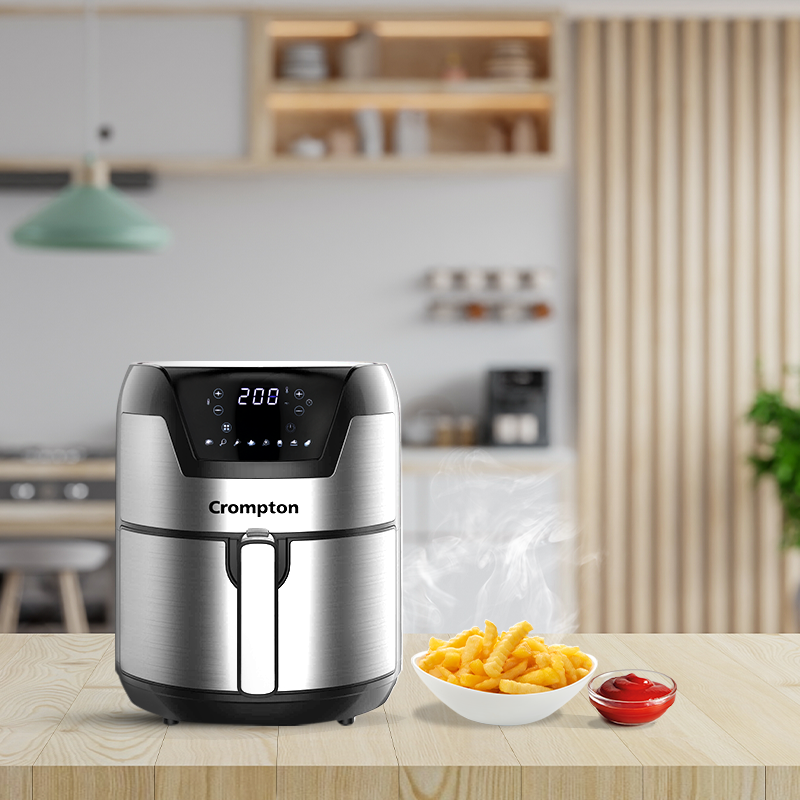
In today’s fast-paced world, where time is of the essence, kitchen appliances that offer convenience and efficiency have become an integral part of our lives. Air fryers and microwaves are two culinary tools that have revolutionised the way we prepare our food, providing quicker cooking times and healthier alternatives to traditional methods.
In this blog, we will delve into the difference between air fryer vs microwaves oven, comparing their features, benefits, and drawbacks, to determine which one truly rules the kitchen.
What is an Air Fryer Used For?
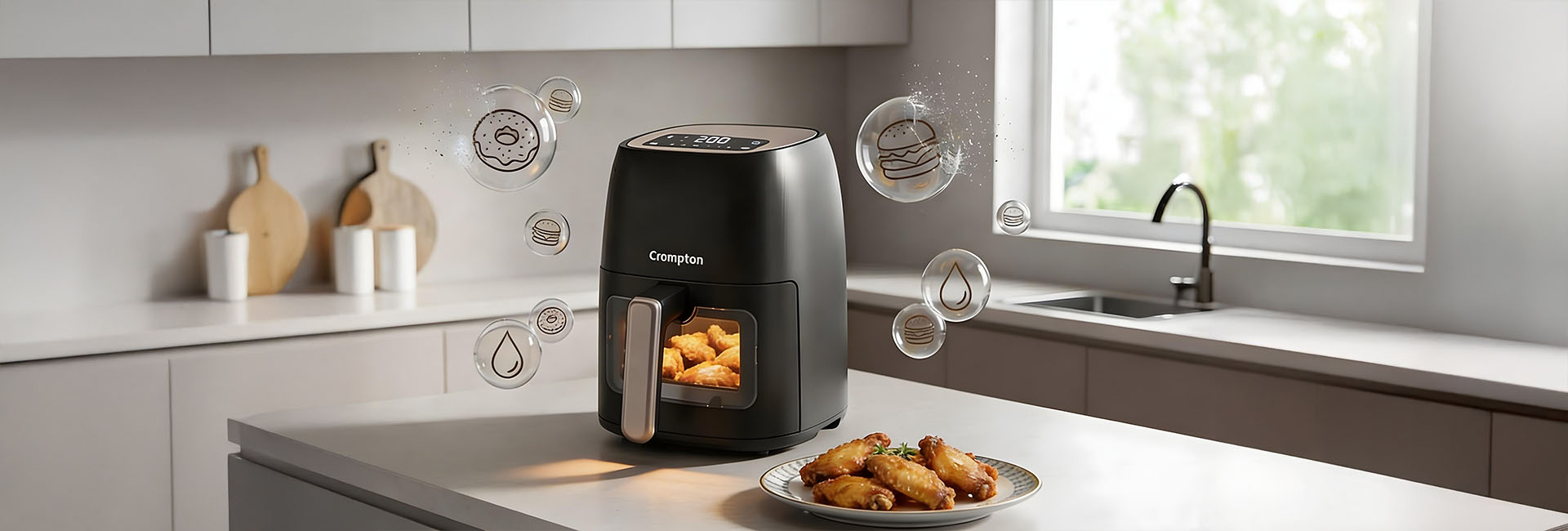
An air fryer is a nifty kitchen appliance that’s great for cooking food in a healthier way. It works by using hot air to circulate around the food, giving it a crispy texture without the need for excessive oil. You can think of it as a mini convection oven, but healthier. It’s perfect for making those deliciously crispy French fries, chicken wings, and even vegetables.
What is a Microwave Oven used for?
A microwave oven is a kitchen appliance used for cooking, heating, and defrosting food. It utilises microwave radiation to generate heat, which in turn cooks or reheats the food placed inside. The microwave oven is designed to be quick and convenient, significantly reducing cooking time compared to conventional methods.
Top 9 Difference Between Air Fryer and Microwave Oven
If you’re confused about difference between an air fryer and a microwave, here are 10 main differences listed below:
1. Cooking Technology
Air Fryer: An air fryer uses rapidly circulating hot air to cook food. It creates a crisp and browned exterior similar to deep frying, but with significantly less oil.
Microwave Oven: A microwave oven uses microwave radiation to heat and cook food. It excites water molecules in the food, generating heat and cooking the food from the inside out.
2. Type of Food that can be Cooked
Air Fryer: Air fryers are excellent for cooking foods that benefit from a crispy texture, such as French fries, chicken wings, and breaded items. They can also be used to bake and roast certain foods.
Microwave Oven: They are suitable for reheating leftovers, defrosting frozen food, cooking vegetables, and heating beverages. They are not ideal for achieving crispy textures.
3. Versatility in Food
Air Fryer: Air fryers offer a wide range of cooking options. Apart from frying, they can grill, bake, and roast various foods, making them versatile kitchen built-in appliances.
Microwave Oven: Primarily used for heating and reheating food. While they can handle a variety of foods, they may not provide the same level of versatility as air fryers.
4. Cooking Capacity
Air Fryer: They come in different sizes, typically ranging from 2 to 6 quarts. Their cooking capacity varies accordingly, allowing you to cook small to moderate portions of food. Read this blog to understand what kinds of food can be cooked in an air fryer.
Microwave Oven: Microwave ovens also come in various sizes, typically ranging from compact countertop models to larger built-in models. Their cooking capacity can accommodate larger portions of food compared to most air fryers.
5. Healthy
Air Fryer: They require little to no oil to achieve a crispy texture, making them a healthier alternative to deep frying. They can significantly reduce calorie and fat intake while still providing similar taste and texture.
Microwave Oven: These home & kitchen appliances do not add any additional fat or oil to food during the cooking process. However, they may not produce the same level of crispiness or browning as air fryers.
6. Power Consumption
Air Fryer: Air fryers typically consume more power than microwave ovens due to their heating elements and fans. The exact power consumption varies based on the model and size.
Microwave Oven: They are generally more energy-efficient compared to air fryers, as they primarily use microwave radiation for cooking.
7. Temperature Range
Air Fryer: Air fryers can reach higher temperatures than microwave ovens, usually up to 400 degrees Fahrenheit (200 degrees Celsius). This range allows for efficient cooking and browning of various foods.
Microwave Oven: Can heat food quickly but generally do not reach high temperatures like air fryers. They typically operate at a maximum temperature of around 212 degrees Fahrenheit (100 degrees Celsius).
8. Ease of Use
Air Fryer: They are relatively easy to use, typically featuring intuitive control panels with preset cooking functions and adjustable temperature and time settings.
Microwave Oven: These appliances are also easy to operate, usually requiring simple adjustments of time and power settings. Most models also come with preset functions for specific types of food.
9. Cleaning and Maintenance
Air Fryer: Air fryers generally have removable non-stick cooking baskets or trays that are easy to clean. Some parts may be dishwasher safe, simplifying the cleaning process.
Microwave Oven: Microwave ovens require regular cleaning of the interior, especially if food spills or splatters. The rotating glass plate and interior surfaces should be cleaned manually.
How Do Cooking Results Differ Between Air Fryer vs Microwave oven?
An air fryer uses rapidly circulating hot air to cook food, which helps create a crisp outer layer while keeping the inside tender. This makes it a popular choice for snacks such as fries, nuggets, cutlets and roasted vegetables. A microwave, on the other hand, focuses on speed and convenience. It heats food quickly and is excellent for reheating leftovers, defrosting frozen ingredients and preparing simple meals in minutes. However, microwave-cooked food may not develop the same golden-brown texture that an air fryer can achieve. If texture and crunch are important, an air fryer often produces more satisfying results, whereas a microwave is ideal when quick heating is the priority.
How Do Air Fryers and Microwaves Compare in Energy Consumption?
|
|
Air Fryer |
Microwave |
|
Air fryer vs microwave energy consumption |
Moderate power usage during cooking |
Uses power for shorter durations |
|
Cooking Time |
certain recipes may take longer |
heats food faster |
|
Best For |
Crisping, roasting and air-frying foods |
Reheating, defrosting and quick cooking |
|
Energy Efficiency |
Efficient for small batches and targeted cooking |
Efficient for short heating cycles |
|
Daily Usage |
Suitable for regular snack and meal preparation |
Ideal for frequent reheating and convenience cooking |
Factors such as the amount of food being prepared, the air fryer vs microwave cooking time required and the size of the appliance can all influence energy consumption. For quick jobs like warming leftovers or defrosting ingredients, a microwave is often the more energy-efficient option because it completes the task in a matter of minutes. An air fryer, meanwhile, can help save energy when cooking smaller meals, as it heats a compact cooking chamber and usually doesn't require the lengthy preheating associated with conventional ovens.
Which Appliance is Better for Different Cooking Needs?
-
An air fryer is the best appliance for cooking if you enjoy crispy, roasted or fried-style foods with little to no oil.
-
An air fryer works well for preparing snacks, grilling vegetables and cooking frozen foods with a crunchy finish.
-
Opt for a microwave when speed and convenience matter most.
-
A microwave oven is particularly useful for reheating leftovers, warming beverages and defrosting ingredients before cooking.
-
If your household frequently prepares quick meals and relies on ready-to-eat foods, a microwave can be a practical everyday appliance.
-
If you prefer experimenting with healthier versions of fried foods, an air fryer may better suit your cooking style.
-
Many modern kitchens benefit from having both cooking appliances, as they serve different purposes and complement each other rather than directly replacing one another.
Microwave Vs Air Fryer: Who’s the winner?
Microwaves and air fryers are both popular electric kitchen appliances with distinct features. Microwaves excel at quick heating and even cooking from the inside out, making them ideal for reheating and cooking certain dishes.
Air fryers, on the other hand, offer a healthier alternative to deep frying, creating crispy textures with less oil. They are versatile, allowing for baking, grilling, and roasting. Choosing between them depends on individual needs and preferences. If you need help with choosing an air fryer, here is our buying guide
Microwaves prioritise convenience and speed, while air fryers cater to those who enjoy crispy and healthier fried foods. So in the debate between microwave vs airfryer, both appliances have their place in the kitchen and can complement each other.
Crompton’s Air Fryers and Microwave Ovens
Crompton has a range innovative kitchen appliances online making your everyday life in the kitchen easier.
The latest Ameo Air Fryer range, feature the Ameo Pro Air Fryer, Ameo DLX Air Fryer, and Ameo Air Fryer. Designed for modern households, these kitchen appliances help simplify everyday cooking.
The Nourispro Air Fryer features Rapid Air Technology, enabling healthier frying with 85% less oil. Its digital touch control panel and 7 preset menus ensure ease of use, while the 4.5L capacity caters to larger meals.
The Voila Microwave Oven boasts a sleek black design and 20L capacity, suitable for various cooking needs. Its 11 power levels, digital display, and 8 auto-cook menus provide versatility and convenience. Experience efficient, healthy cooking with Crompton’s Air Fryers and Microwave Ovens.
Ameo Edge 5L Air Fryer: Experience healthier oil-free cooking with the compact 5L Ameo Edge Air Fryer, featuring Nutriguard technology, an edge-to-edge metal cavity for better heat retention and aroma preservation, plus 10 smart presets for effortless everyday cooking.
Crompton champions healthier cooking with advanced air fryers that let you enjoy your favourite dishes using little to no oil. Experience crispy, delicious results while embracing a smarter, oil-conscious way of cooking every day.
FAQs on Air Fryers vs Microwaves
1. Which is better: an air fryer or a microwave?
An air fryer is ideal for cooking healthier, crispy dishes, while a microwave is best for quick reheating and defrosting. Choose the appliance that aligns with your specific cooking needs and preferences.
2. Can we reheat food in the air fryer?
Yes, you can reheat food in an air fryer. For optimal results, set the temperature to 350°F and reheat for 3-4 minutes, checking the food’s internal temperature to ensure it’s heated thoroughly.
3. Is it cheaper to use an air fryer or a microwave?
Microwaves generally consume less energy and are cheaper to use compared to air fryers. However, the difference in cost may be negligible depending on usage frequency and duration, so consider your cooking habits when making a decision.
4. Can an air fryer replace a microwave?
While an air fryer can cook and crisp food effectively, a microwave remains more convenient for reheating leftovers, defrosting ingredients and quickly warming beverages or prepared meals.
5. Which appliance consumes less electricity?
For short tasks such as reheating or defrosting, a microwave typically uses less electricity due to its faster cooking times. Actual consumption depends on usage patterns, food quantity and cooking duration.
6. Which is better for Indian cooking?
Both appliances have their strengths. Air fryers are great for snacks like samosas and tikki, while microwaves are better suited for reheating curries, rice and everyday meals.
 Read Previous Blog



 at 9228880505 or write to us at
